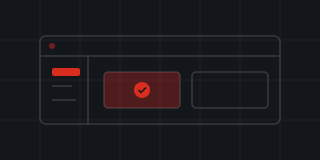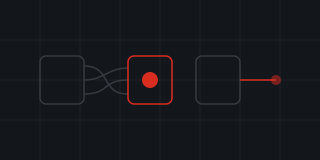
The first wave of AI features shared a shape: take an application built for humans, bolt a model onto the side, and route its output through interfaces designed for hands and eyes. That’s a plugin. It works, briefly, and then you hit the ceiling.
The ceiling is structural. A model driving a human interface pays a translation tax on every interaction — screenshots parsed back into meaning, generated text re-parsed into structure, state guessed from pixels. Every hop loses information and burns tokens.
A protocol removes the hops. When an application exposes its state as a structured, validated representation — a component tree, a typed context interface, a scoped file view — the model reads and writes the same structure the application uses internally. Nothing is guessed; everything is checkable.
This is the bet behind our protocol research: the Virtual DOM Protocol gives models a UI representation they understand natively, the Model Context Protocol structures what applications feed them, and the W0rkTree Protocol scopes source control to what a task needs. Same idea, three surfaces.
The practical difference shows up in our own products. Nokuva doesn’t screenshot a browser to check its work — it verifies a VNode tree against a spec. The efficiency gains aren’t an optimization; they fall out of the architecture.
Plugins were the right way to explore. Protocols are the right way to build. The specs are open — the whole point of a protocol is that nobody owns the interface.