Overview
Selling GPU time comes down to three questions: what hardware exists, what is free, and who holds it. Get any of them wrong and two customers end up on the same GPU, or a paid-for machine sits idle. On LegionEdge Cloud, all three are answered by Better Compute, an open-source TypeScript control plane we build alongside the platform.
This post covers what Better Compute is and how LegionEdge Cloud uses it.
What Better Compute is
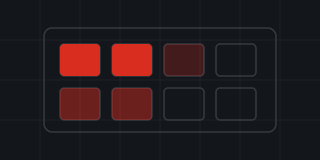
Better Compute is an embeddable control plane for GPU, CPU and bare-metal capacity. The database referees every booking, so double-booking is impossible by construction rather than prevented by careful code. You can reserve whole GPUs, MIG slices or gangs of nodes through one typed API, a CLI or MCP tools.
It also makes machines useful once they’re booked. It can adopt a running server, deploy an image over PXE, and run a VPS or a sandbox on your own hosts or a provider’s: Hetzner Cloud, Proxmox VE, Google Compute Engine and DigitalOcean today. Capacity can be handed to customer tenants with their own networks and firewall rules.
How LegionEdge Cloud uses it
LegionEdge Cloud runs one Better Compute instance on Postgres, in its own schema, built beside the platform’s Better IAM instance. Better IAM is its identity provider, its policy decision point and the ledger usage is billed against.
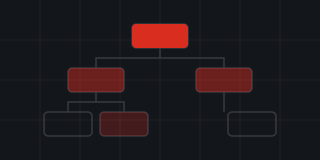
Our catalog maps onto it directly: provider accounts become sites and pools, each live offer becomes a flavor, and each organization gets its own offer. When you launch a GPU instance, placement looks at the pools your organization can use and ranks them by region, availability and price. If a pool refuses the request, provisioning falls through to the next one instead of failing.
Your plan’s compute limits become per-pool quotas that are checked before anything is placed. Usage flows into billing, and when a budget alert fires, the budget policy can stop managed instances.
Try it on your laptop
Better Compute ships a full local control plane. One command, npx better-compute dev --memory --sim 8, starts an in-memory database, an embedded Better IAM, a gateway and eight simulated HGX H100 machines that join the way real ones do. From there you can reserve GPUs, check a pool’s capacity and release them again. The code and documentation are on GitHub.